
Russiagate
A Story of Deep Politics and Mafia

Since 1996, Felix Sater had been a ghost in the machinery of American national security. Recruited by the DIA during business deals in Moscow, he became a Swiss Army knife for the CIA and the FBI.
Following his family’s emigration from Moscow in 1974, Sater’s father, Mikhail Sheferovsky, established himself as an underboss to Semion Mogilevich (all jewish Solntsevskaya Bratva), the “boss of bosses” of the “Russian mafia”. It was in these same Brooklyn neighborhoods that Sater forged a lifelong friendship with Michael Cohen, the future personal attorney and “fixer” for Donald Trump.
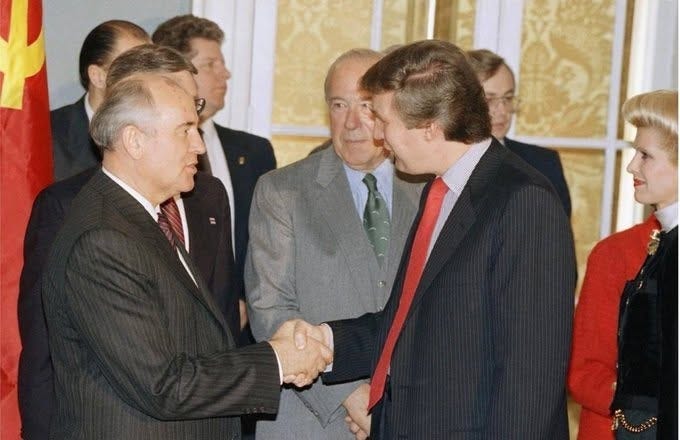
But this world was bound together by more than just childhood loyalty and mob money; it was anchored in the highly influential Hasidic movement Chabad-Lubavitch.
As Sater built his real estate career, he became a prominent benefactor of the movement. He settled on Long Island’s Gold Coast and became a pillar of Chabad of Port Washington, where he was named “Man of the Year” in both 2010 and 2014. Sater was not alone in this network. Key partners in his real estate firm, the Bayrock Group—such as Kazakh-Turkish developer Tevfik Arif and billionaire Tamir Sapir—likewise navigated the elite circles of Chabad, as did Donald Trump’s future son-in-law, Jared Kushner.
Far from a purely spiritual endeavor sources characterize the Chabad network as a highly effective, off-the-books clearinghouse for international diplomacy.
Prior to 1999, a prominent Jewish umbrella organization was the Russian Jewish Congress (RJC), founded by media oligarch Vladimir Gusinsky. Gusinsky and other figures in the RJC had backed political candidates who opposed Putin's rise to power. To counter groups critical of his government, Putin allied with Lev Leviev, who supported him politically. Starting in 1999, Putin enlisted Leviev and Roman Abramovich to create a new organization to displace the existing RJC. Jewish billionaires Lev Leviev and Roman Abramovich became the primary financial backers and patrons of the Federation of Jewish Communities of Russia under Chief Rabbi Berel Lazar, widely known as “Putin’s rabbi.”
Yevgeny Dvoskin is a Russian-born financier who became known as one of Russia's most notorious "shadow bankers". He grew up in the United States in the Brighton Beach neighborhood of New York. Upon his return to Moscow in 2004, Dvoskin used his connections with high-profile criminal figures - such as his uncle, Vyacheslav “Yaponchik” Ivankov - to become the driving force behind some of Russia’s biggest money-laundering schemes. Felix Sater and Dvoskin grew up together in Brighton Beach and were best friends since childhood.
“Under Charlie Ryan, who’d first met Putin in St Petersburg in the early nineties, its Moscow arm [of Deutsche Bank] was home for the corporate accounts of Putin’s closest allies – Timchenko, Rotenberg and Kovalchuk – while it had cultivated close relations with the powerful Russian state bank VTB, employing the son of its head, Andrei Kostin. Josef Ackerman, the then Deutsche Bank chief, hobnobbed with Kostin and frequently consulted him. Deutsche Bank Moscow later became the vehicle for the more than $10 billion in illicit transfers through the mirror-trade scheme of which Felix Sater’s close friend Yevgeny Dvoskin was an architect.“ (11) Putin's People: How the KGB Took Back Russia and Then Took On the West by Catherine Belton.
Catherine Belton's book, Putin's People, is far from an objective investigation into Putin's Russia. For instance, she uses Anton Surikov of Far West Ltd. as a source. Nevertheless, it provides significant insight into the connections between the East and the West.
“But Sater was also following a time-honoured tradition. Ever since Soviet times, Russian mafia associates from Brighton Beach had offered themselves as FBI informants in exchange for criminal charges being dropped.[73] But Sater’s organised-crime and Russian intelligence contacts should have set alarm bells ringing [the author expects you to accept that the FBI is remarkably gullible and duped by Putin’s 10D chess mastery and how he is “taking on the West”]. He’d even helped the FBI uncover the stock-fraud scheme, leaving a stash of firm AT&T, to negotiate a $100 million deal to rent out a transatlantic cable to the United States, and that it was through this proposed deal that he came into contact with high-level officers from Russian military intelligence, who controlled the country’s telecoms.[68] But he would never have gained such access so fast had it not been for his connections in Russian organised crime. Those connections included Mogilevich, who collaborated with Russian foreign intelligence, according to Yury Shvets and a former close Mogilevich associate who knew Sater“. (11)
By 2006, Felix Sater was indeed operating as a managing director of the Bayrock Group, a real estate firm that had offices in Trump Tower and partnered with Donald Trump on projects like the Trump SoHo high-rise. At Trump's request, Sater accompanied Donald Jr. and Ivanka Trump on a trip to Moscow to scout real estate opportunities. During this trip, Sater famously claimed he used his Kremlin connections to arrange for Ivanka to sit in Vladimir Putin's desk chair.
Sater provided extensive intelligence to the U.S. government. He has publicly claimed that his work involved tracking the Taliban and the Northern Alliance, disrupting Al-Qaeda operations, and providing intelligence regarding the location of Osama bin Laden prior to 9/11. For his efforts, Sater was praised as a “national hero” who had saved millions of American lives.
For example, during a 2011 court hearing, federal prosecutor Todd Kaminsky stated that Sater provided cooperation that “was of an extraordinary depth and breadth, almost unseen, at least in this United States attorney’s office”.
This relationship culminated in November 2015 at the beginning of the U.S. presidential campaign. Sater partnered with Cohen to negotiate a massive deal to build a Trump Tower in Moscow - a project slated to be financed directly by VTB Bank, an institution widely recognized by Western intelligence as a financial front for the Russian FSB.
Believing he could leverage his dual networks, Sater fired off a series of historic, boasting emails to Michael Cohen. He laid out a plan to use the real estate deal to vault Trump into the White House, writing: “I will get Putin on this program and we will get Donald elected”. Sater boldly bragged to his childhood friend that they could “engineer” the presidency. While Sater was boasting about his ability to coordinate with the Kremlin, he was still an active, highly classified informant reporting to the FBI’s New York field office.
“Keep in mind that in his FBI work on the Russian mafia, Sater reported to the New York FBI office — which apparently considers him a hero — the majority of the time. As discussed previously, this is the same FBI office that was ravenously anti-Clinton during the 2015-2016 election season and the source of several“. (1)
Taddeo remained a dominant force in the New York field office for decades, eventually rising to become the Special Agent in Charge of the FBI New York’s Cyber/Special Operations Division. He held this post until 2015.
By 2016, the New York FBI office had transformed into a hotbed of intense political friction. By 2016, this feud aligned perfectly with a broader, triple-pronged U.S. national security, Russian, and Israeli campaign to prevent Clinton from securing the presidency.
According to subsequently released Office of the Inspector General (OIG) reports, the New York field office—alongside aligned factions of the NYPD—was heavily staffed by highly biased counterintelligence agents harboring what was described as a “deep and visceral hatred” for Democratic nominee Hillary Clinton. These “rogue agents“ were fanatically pro-Trump and began actively leaking classified counterintelligence data to the media. The primary recipient of this stolen intelligence was Trump surrogate Rudy Giuliani, who publicly boasted on television that he possessed highly sensitive, active pipelines directly into the New York office.
The supposed “factional” war reached a boiling point in October 2016. When New York agents “discovered” Clinton-related emails on the personal laptop of disgraced former congressman Anthony Weiner, the anti-Clinton faction in New York threatened to independently leak the existence of the files to the press to destroy her campaign.
In Washington, a panicked FBI Director James Comey realized his New York office was completely out of control. Fearing a public mutiny and a total collapse of institutional authority, Comey preempted his own New York agents. On October 28, 2016, he released the infamous “Comey letter” to Congress, publicly reigniting the Clinton investigation just eleven days before the election.
As Julian Assange sat confined in the Ecuadorian embassy (a confinement that began in June 2012 and would last until his arrest in April 2019), WikiLeaks emerged during the 2016 U.S. presidential election cycle as the premier laundering portal for files stolen by Russian intelligence.
WikiLeaks served as the primary conduit for the release of internal Democratic National Committee (DNC) and John Podesta emails. U.S. intelligence agencies and the Mueller Report found that these emails were stolen by the GRU (Russian military intelligence) and laundered through WikiLeaks (using online personas like Guccifer 2.0) to damage Hillary Clinton's campaign.
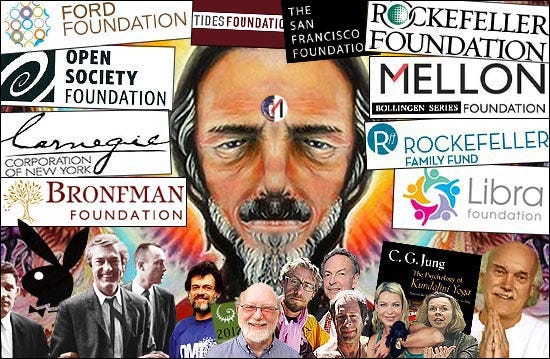
In late September/early October 2016, the German weekly news magazine Focus published an article titled "Merkel vorgeführt: Russischer Geheimdienst nutzt Wikileaks für Kampagnen" (Merkel duped: Russian secret service uses WikiLeaks for campaigns).
The report stated that Russian intelligence was actively using and weaponizing WikiLeaks to conduct targeted disinformation and media campaigns against the West. This aligned with the consensus of U.S. intelligence agencies at the time, which concluded that Russian military intelligence hacked Western targets and used WikiLeaks as a conduit to release the stolen information.
Official intelligence assessment including the declassified 2017 U.S. Intelligence Community Assessment and the bipartisan Senate Intelligence Committee report concluded that the GRU used WikiLeaks as a cut-out (a third-party publishing mechanism) to hide their involvement. The intelligence consensus is that Russian operatives pushed the stolen data to WikiLeaks.
Adam Waldman, a lobbyist for Putin inner circle member and Russian oligarch Oleg Deripaska (one of Paul Manafort’s clients while he was in Ukraine) and former counsel for Russian foreign minister Sergei Lavrov, secretly visited Julian Assange nine times at the Ecuadorian embassy in London in 2017.
“This of course isn’t the only backchannel Wikileaks had — Wikileaks additionally had secret channels of communication with Donald Trump Jr. and Trump political consultant Roger Stone (who had advance knowledge of Wikileaks releases), something that all three parties have frantically attempted to cover up” (1)
To the casual observer (like myself), the final weeks of the 2016 U.S. presidential election appeared as a succession of disconnected shocks: leaked recordings, stolen emails dropping by the hour, and desperate, late-stage federal investigations.
But perhaps the chaos is only apparent?
July 22, 2016 WikiLeaks published its first massive trove of stolen DNC emails. The drop occurred exactly three days before the Democratic National Convention opened in Philadelphia, successfully fracturing the party by pitting Bernie Sanders’ supporters against the party establishment.
The Washington Post published the Access Hollywood tape slightly after 4:00 pm on October 7. Wikileaks began dumping John Podesta’s stolen emails approximately 30 minutes later. U.S. intelligence analysts have frequently pointed to this incredibly tight timeline as evidence that “Russian operatives (who hacked the emails) and WikiLeaks deliberately deployed the stolen data to instantly deflect the media cycle away from Trump’s catastrophic scandal”.
Just four days before the election, WikiLeaks dropped a fresh batch of Podesta emails containing “spirit cooking” messages. WikiLeaks immediately linked to the 9/11 conspiracy outlet We Are Change to frame the email in the most sensationalized, damaging light possible. This drop acted as the primary catalyst for the “Pizzagate” disinformation campaign. The hoax was aggressively amplified on social media by Trump transition team members, including National Security Advisor General Michael Flynn, allegedly at the center of the QAnon operation and Blackwater founder Erik Prince, a long time contractor for JSOC, who utilized the scandal as an information-warfare weapon to suppress Clinton’s remaining support.
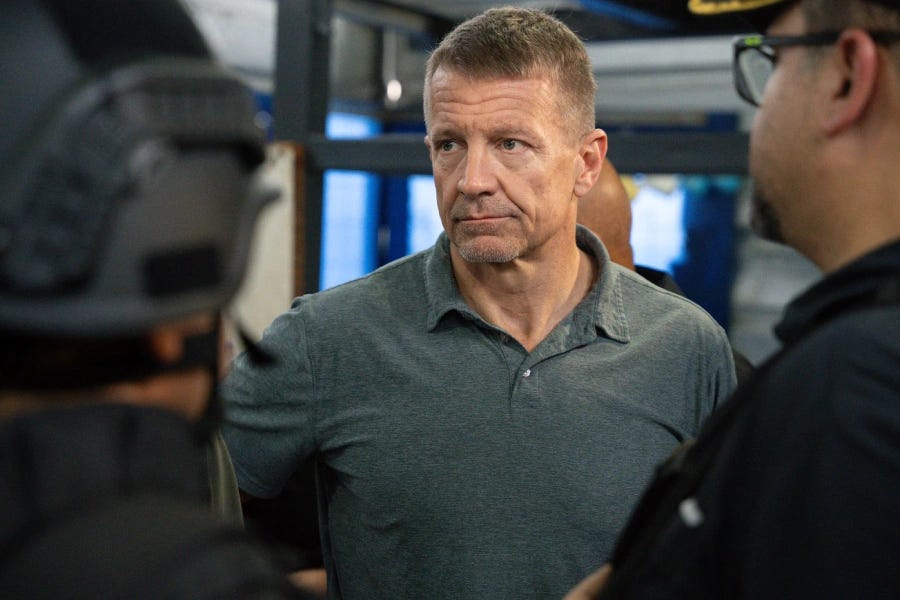
General Michael Flynn and Erik Prince were part of the broader Cambridge Analytica network that brought Trump to power in the first place. Israel is also well represented in this network via the Israeli private intelligence firms Black Cube and Psy Group.
The standard narrative casts Julian Assange as a rogue, anti-establishment hacktivist who operated outside the orbit of state power. But a look into his history reveals glaring counterintelligence anomalies.
For example, while WikiLeaks was cut off from the global banking system by PayPal, Visa, and MasterCard in 2010, an elite vehicle called the Freedom of the Press Foundation (FPF) was established in 2012 to process tax-deductible donations for the group. FPF was fiscally sponsored by the Foundation for National Progress (parent of Mother Jones magazine), which was directly bankrolled by some of the most powerful organizations in the world: the Ford Foundation, the MacArthur Foundation, the Rockefeller Family Fund, and George Soros's Open Society Institute.
In June 2011, while under house arrest, Assange was visited by Google CEO Eric Schmidt and his close ally Jared Cohen (a former State Department policy advisor). Leaked documents from the private intelligence firm Stratfor later revealed that Google was receiving "White House and State Dept. support & air cover" to perform covert, international uprisings and soft operations that the CIA legally could not execute.
JSOC
The Joint Special Operations Command (JSOC) is widely recognized as the most secretive and lethal wing of the United States military. Operating as a highly compartmented command, JSOC oversees the nation’s premier Tier 1 “special mission units,” which include Delta Force, DEVGRU (commonly known as SEAL Team 6), and the Intelligence Support Activity (ISA, also known as “Task Force Orange” or “The Activity”).
Because JSOC operators possess the highest security clearances and the most advanced tactical and intelligence training on earth, they are the most prized commodity in the Private Military Company (PMC) sector. When elite operators retire, they routinely pivot to the private sector, where specialized corporate mercenary firms offer salaries that vastly exceed standard military pay. In turn, PMCs have frequently been used to augment JSOC operations, supplying logistical or intelligence support, and, in some cases, operating alongside them in covert lethal action programs.
Historically, JSOC has maintained a fierce, bureaucratic rivalry with both the traditional Joint Chiefs of Staff (JCS) and the CIA. Both JSOC and the CIA are tasked with hunting high-value targets, conducting covert action, and running intelligence operations abroad. For decades, they fought over funding, jurisdiction, and primacy. While the post-9/11 War on Terror forced them to collaborate much more closely—such as through the creation of joint “Omega Teams”—friction frequently remained over who ultimately controlled operations and assets in theaters like Afghanistan and Iraq.
Meanwhile, conventional military brass on the JCS historically viewed JSOC as an uncontrolled “private army” operating outside standard military discipline. Conversely, JSOC operators viewed the traditional military bureaucracy as slow, compartmented, and hopelessly out of touch.
The political influence of JSOC reached its zenith in late 2020 during the final months of the Trump administration. A key actor in this political takeover was Kash Patel, a national security attorney who cut his teeth in the mid-2010s working directly as an assigned defense lawyer for JSOC.
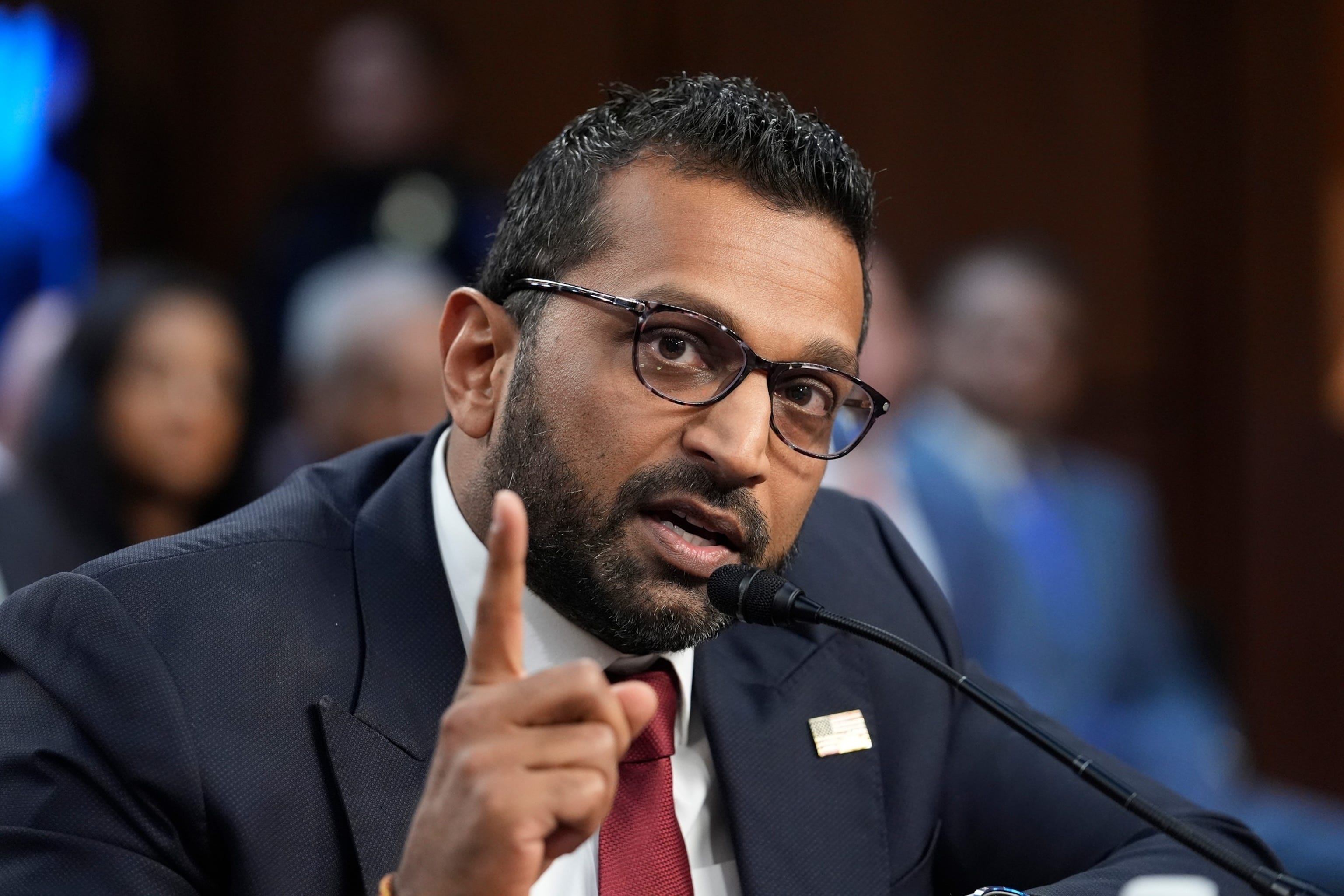
In late 2020, Patel was installed as Chief of Staff to Acting Secretary of Defense Christopher C. Miller, a career Special Forces Green Beret who had served in Task Force Orange. Alongside them was policymaker Ezra Cohen-Watnick, a close ally of former DIA chief and JSOC veteran Michael Flynn, who was allegedly at the center of the QAnon operation.
This special operations vanguard bypassed traditional military leadership, leading to intense friction with the conventional brass on the Joint Chiefs of Staff. Patel and his allies accused the JCS of using “security compartments” to hide operational details from civilian leaders, while Miller publicly lamented that the Pentagon’s hierarchy was “rotten.”
Before exiting the Pentagon in January 2021, this faction secured a permanent structural victory for their network. Miller elevated the civilian oversight role for special operations by enacting a policy that directed the Assistant Secretary of Defense for Special Operations and Low-Intensity Conflict (ASD SO/LIC) to report directly to the Secretary of Defense. This effectively put that specific civilian position on par with the civilian Secretaries of the Army, Navy, and Air Force for administrative, manning, and equipping purposes.
Patel’s political trajectory eventually culminated in a highly divisive FBI confirmation. For decades, FBI directors had enjoyed overwhelming, bipartisan backing: Robert Mueller was confirmed unanimously (98–0) in 2001, James Comey won 93 votes in 2013, and Christopher Wray was confirmed with 92 votes in 2017.
Kash Patel, by contrast, squeaked through with a paper-thin 51–49 margin. The vote was strictly party-line, with 51 Republicans voting in favor, while two key Republican defections joined the 47 Democrats in opposition. Senator Susan Collins issued a scathing statement regarding her opposition, citing the forced DOJ resignations and the controversial Jan 6 agent questionnaire. She stated that Patel’s actions “cast doubt on [his] ability to advance the FBI’s law enforcement mission in a way that is free from the appearance of political motivation.”
QAnon
The most bizarre and controversial thread of the JSOC network is its persistent intersection with QAnon, the sprawling, military-style digital disinformation campaign that emerged during the Trump presidency.
What is QAnon?
“QAnon is a decentralized, far-right political conspiracy theory that originated in 2017 on the anonymous imageboard 4chan. At its core, the narrative claims that a global cabal of Satan-worshiping, cannibalistic elites—comprising prominent Democrats, Hollywood actors, and wealthy financiers—controls the world and operates a massive child sex-trafficking ring.
The mythology is driven by an anonymous internet poster known as “Q,” who claimed to be a high-ranking intelligence officer with “Q-level” security clearance. “Q” would drop cryptic messages, or “crumbs,” which followers would decode to understand the supposed hidden war being waged behind the scenes.
In the QAnon narrative, Donald Trump is not just a politician; he is the central messianic figure. The mythology asserts that the “Deep State” had completely compromised the U.S. government until top military generals recruited Trump to run for president specifically to dismantle the cabal.
Everything in the QAnon universe revolves around Trump:
The 5D Chess Master: Followers believed that Trump’s seemingly erratic behavior, typos in tweets (like “covfefe”), and political missteps were actually complex coded messages and strategic feints in a secret war against the Deep State.
“The Storm”: The ultimate prophecy of QAnon is an event called “The Storm.” This was envisioned as a specific day when Trump would publicly unmask the cabal, leading to mass arrests, military tribunals, and the executions of thousands of elites.
Trust the Plan: When political realities contradicted the conspiracy (such as Trump’s election loss in 2020), followers were repeatedly told by Q to “Trust the Plan,” reinforcing the belief that Trump was entirely in control of a massive, hidden military operation.“
Ezra Cohen-Watnick is documented as a key Pentagon policymaker who worked closely with Miller and Patel during this transition. The sources establish him as a direct protégé and close national security ally of General Michael Flynn, dating back to when Flynn was the head of the Defense Intelligence Agency (DIA). Flynn himself is a JSOC veteran who famously managed elite intelligence operations under General Stanley McChrystal.
The psychological campaign began in early November 2016 with the orchestration of the Pizzagate disinformation operation. On November 4, 2016, WikiLeaks released a fresh batch of hacked emails from John Podesta containing “spirit cooking” messages, immediately linking to conspiracy outlets to frame them in the most sensationalized, damaging light possible. General Michael Flynn, then a key Trump transition team advisor, was promoting and amplifying this anti-Clinton hoax on social media. The real-world consequences of this campaign manifested rapidly when Flynn’s son, Michael Flynn Jr., was forced off the Trump transition team after relentlessly pushing the online conspiracies.
As the Trump administration progressed, the Pizzagate mythology mutated into QAnon, a sprawling, military-style digital disinformation campaign. There are structural and symbolic ties between the QAnon narrative and the elite counterintelligence circles of the Joint Special Operations Command (JSOC). The Intelligence Support Activity (ISA), the ultra-secretive intelligence arm of JSOC in which future Acting Defense Secretary Christopher C. Miller served, historically operated under several highly classified cover names to mask its global operations. One of its most famous cover names was the “Army of Northern Virginia”-the exact same moniker popularized by alternative media to describe the group of military intelligence officers rumored to be running the QAnon operation.
“You see, "Task Force Orange" was the original name for what is commonly referred to now as the "Intelligence Support Activity" (ISA), or simply "The Activity." The ISA is one of the most elite and secretive intelligence outfits in the entire national security apparatus. Among other things, it's JSOC's principal intelligence service. ISA members are frequently recruited from the ranks of the Green Berets, making Miller's background fairly typical of these types of operators. "Incidentally," another of the names used by the ISA is the "Army of Northern Virginia," which was also said to be the name of the group of military intelligence officer overseeing QAnon.” (2)
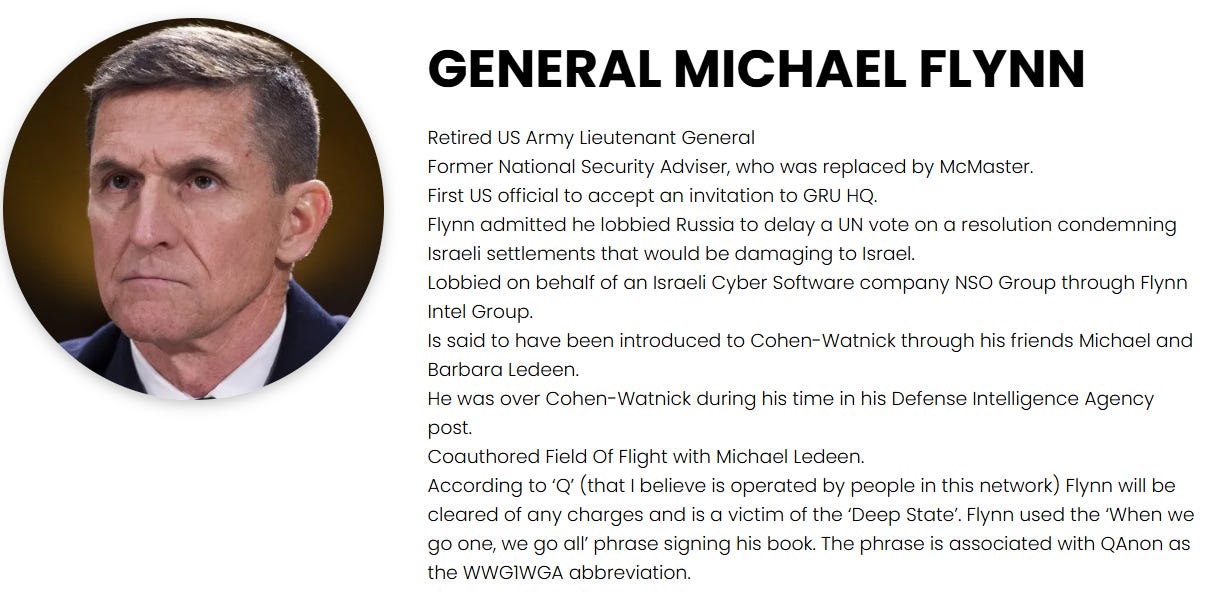
As a direct protégé of Michael Flynn from their days together at the Defense Intelligence Agency (DIA), Cohen-Watnick rose to become a powerful Pentagon policymaker. Because of his proximity to Flynn, Cohen-Watnick was accused of being directly involved in the QAnon operation for years. Although Cohen-Watnick utilized an embedded Vanity Fair profile in early 2021 to denounce the “Q bots” and distance himself from the movement, researchers suggest that Flynn and his associates remained the guiding forces behind the operation.
While Kash Patel was not personally accused of executing the QAnon leaks but had a role as a JSOC defense attorney and amplifier of the QAnon mythology. Patel was a founding member of the board of directors for Trump Media & Technology Group (TMTG), the parent company that launched Truth Social in early 2022.
When Truth Social launched, its primary challenge was user acquisition. Because mainstream platforms like Twitter and Facebook had aggressively banned QAnon accounts and influencers following the January 6th Capitol riot, Patel recognized that there was a massive, highly engaged, and deplatformed audience looking for a new digital home. He spearheaded the effort to bring them to Truth Social. He praised QAnon influencers as the "real journalists" who were doing the heavy lifting to expose the "Deep State."
Cambridge Analytica
Far from a standard digital advertising campaign, Cambridge Analytica and its parent company, the SCL Group, deployed military-grade behavioral modification and mass deception techniques originally perfected on foreign battlefields.
Through an intricate web of British aristocrats, right-wing billionaires, Israeli private spies, and CIA-funded Silicon Valley data engines, this private intelligence consortium permanently hacked the democratic process.
Cambridge Analytica was not spawned in Silicon Valley, but within the elite, imperial corridors of the British establishment. Its parent company, the SCL Group (formerly Strategic Communications Laboratories), grew out of the Behavioral Dynamics Institute, established circa 1990 by Nigel Oakes. Oakes, an Old Etonian rumored to be an MI5 asset who once dated a member of the royal Windsor family, focused the firm on mass behavior modification and group psychology profiling. Under Oakes’ guidance, SCL operated as a privatized psychological warfare department, contracting with the Pentagon and the UK Ministry of Defense to execute “sophisticated campaigns of mass deception” and, by its own admission, assist in orchestrating coups in developing nations.
The company’s leadership was a roster of the British old guard.
SCL’s CEO Alexander Nix was an Old Etonian descended from a long line of City of London bankers. Nix cut his teeth at Barings Securities in Mexico—a subsidiary of Barings Bank, the Queen’s personal banker, which collapsed in 1995 amid allegations of deep ties to the British intelligence community.
Sir Geoffrey Pattie was key SCL director and longtime Tory MP who served as Margaret Thatcher’s Minister of State for Industry and Information Technology, Pattie had spent the 1980s overseeing the Department of Trade and Industry (DTI), which was heavily implicated in illicit, cover-up arms deals.
One of SCL Group’s largest owners and investors was Vincent Tchenguiz, a London-based multi-billionaire Tory donor was one of SCL Group’s largest owners and investors. Tchenguiz maintained extensive business and advisory ties to Russian and Ukrainian oligarchs, managed in part by his PR advisor David Burnside—a pro-Brexit Northern Irish politician whose PR firm functioned as a prominent hub for pro-Russian, counter-NATO propaganda.
Lord Marland, a former Treasurer of the Conservative Party, and Lord Ivar Mountbatten, a member of the extended Royal Family, provided the crucial high-level backing that allowed Oakes’ privatized psychological operations unit to thrive at the highest levels of British society.
In 2013, this British network was bought into by right-wing hedge-fund billionaire Robert Mercer and his daughter Rebekah Mercer. Alongside Breitbart News executive Steve Bannon—who took a high-level executive and strategic role in the firm - the Mercers funded the creation of Cambridge Analytica as an American-facing political weapon.
Long before Donald Trump officially declared his candidacy, Cambridge Analytica was already utilizing SCL’s behavioral profiling algorithms to map the psychological vulnerabilities of the American electorate.
Under the direct command of Steve Bannon, the firm began testing highly specific, anti-establishment slogans on American focus groups as early as 2014. Slogans that would later define the Trump presidency—including “drain the swamp” and “deep state”—were meticulously pre-tested and refined years in advance.
Most strikingly, Cambridge Analytica used these 2014 focus groups to test American reactions to building a wall on the Mexican border and toward Russian expansionism. The firm discovered a fascinating psychological paradox: if presented with the correct emotional framing, a significant portion of conservative Americans could be conditioned to admire Russian President Vladimir Putin as a strong, authoritarian leader.
During this same pre-election period in 2014, Cambridge Analytica went to work for John Bolton’s Mercer-backed PAC, securing a $5 million contract. According to Cambridge Analytica whistleblower Christopher Wylie—a computer scientist who famously stated that (quoting Steve Bannon's philosophy) “if you fundamentally want to change society you first have to break it... is when you can remold the pieces” - the explicit objective of the Bolton project was to use psychographic profiling to “make people more militaristic in their worldview”.
The operational execution of Cambridge Analytica’s campaign relied on systemic data harvesting and quiet collusion with Silicon Valley’s most powerful surveillance entities.
The firm’s predictive models were built on the harvested data of 50 million Facebook users in the United States. Although Facebook’s leadership was fully aware of this massive, illicit data pilfering for two and a half years, the tech giant took no action to halt it until the public scandal officially erupted in March 2018.
While Cambridge Analytica publicly marketed its “psychographic micro-targeting” as an artificial intelligence miracle, independent analysts noted that the firm often exaggerated its proprietary tech. Instead, the true analytical engine of the digital campaign was Palantir- the CIA-funded, Pentagon-backed predictive analytics giant co-founded by billionaire Trump transition advisor Peter Thiel.
“Employees of Thiel's venture capital and investment firms were seconded to work on the Trump campaign and employees of Palantir worked extensively with Cambridge Analytica on building psychographic models based on Facebook data. [290] According to a Forbes expose, the Trump digital campaign “delved into message tailoring, sentiment manipulation and machine learning” – machine learning the crux of cutting edge predictive analytics, the type Thiel's Palantir focuses on almost exclusively. This means that a CIA-Pentagon analytics appendage's expertise and know-how was weaponized for direct use in the “anti-establishment” Trump digital campaign. Given Analytica's sometimes dubious capacity as an effective digital campaigning firm, Palantir may very well have been the real engine behind the Trump digital campaign. Certainly, Thiel's involvement would make sense, given the fact that he and Palantir have everything to gain from Trump and his administration's advocacy for the vast expansion of the surveillance state both in scope and scale. However, regardless of what the exact details are, it's clear that Thiel was indispensably involved in the campaign in some way given the fact that he almost became the chairman of the President's Foreign Intelligence Advisory Board before turning the position down.“ (1)
As the 2016 campaign reached its fever pitch, Cambridge Analytica’s leadership operated at the center of an incestuous web of private intelligence agencies and international backchannels.
In undercover footage, SCL CEO Alexander Nix admitted that his firm routinely hired private British and Israeli intelligence agencies to coordinate honey traps, entrapment stings, and covert surveillance against political opponents. This manifested in a formal partnership with Psy-Group, a covert online manipulation firm staffed by former Israeli intelligence operatives specializing in social-media war-gaming. Concurrently, Cambridge Analytica shared the same financial backers as Black Cube, another notorious Israeli private spy firm staffed by former Mossad officers.
At the same time, Cambridge Analytica’s data operations intersected directly with Julian Assange. During the height of the campaign, Alexander Nix reached out directly to the WikiLeaks founder, requesting assistance in “locating” Hillary Clinton’s missing 33,000 State Department emails.
The Steele dossier
In an interview about the special counsel’s report, Rep. John Ratcliffe (now the director of the Central Intelligence Agency considered a staunch loyalist to Donald Trump) said that what “started all of this” was “a fake, phony dossier.” But a House Republican intelligence committee memo said it was information about a Trump campaign foreign policy adviser that sparked the FBI’s counterintelligence investigation into Russian interference in the election.
After leaving the first Trump administration, Ratcliffe joined the conservative Heritage Foundation as a visiting fellow. In this role, he was directly involved in helping craft intelligence reform policies for Project 2025, the sweeping blueprint designed to staff and restructure the federal government for a second Trump term.
The “dossier” is a series of memos compiled by former British intelligence officer Christopher Steele on supposed contacts between Russian officials and members of the Trump campaign. It alleged the Russian government had compromising information on then-Republican presidential candidate Donald Trump. Steele was hired by the research firm Fusion GPS.
The VISUP article “As Above, Revolt Below” delivers a highly cynical, comprehensive critique of the Steele Dossier and the broader “Russiagate” narrative. (3)
Rather than treating the dossier as a serious intelligence document, Recluse frames it as part of a “disastrous hoax” and a “bogus narrative” of Russian collusion. The post argues that the entire scandal was fabricated wholesale to serve as a weapon in a bitter, internal “civil war” raging within the U.S. national security apparatus.
The author of Akamai Tree argues that the Steele Dossier cannot be dismissed as a partisan "hoax" or a complete fabrication. Akamai Tree relies on the broader network that encompasses Russia, Israel, Trump, and the US intelligence apparatus, including the FBI, CIA Director James Woolsey, Kissinger, and others.
So… can both be true?
In my view, both narratives can coexist. It is entirely plausible that Russia’s 2016 election meddling was directed from the very top of the Kremlin - including by President Vladimir Putin and his FSB agents - while the US and UK intelligence apparatus simultaneously outsourced its counter-operations to third-party foreign intermediaries like Putin. By operating through these cutouts, US and UK intelligence could interface with, or even weaponize them while maintaining a facade of plausible deniability.
Under this arrangement, Putin can also maintain plausible deniability by pointing to the glaring flaws in the Steele Dossier or the toxicity of partisan US politics. Alternatively, he and his trolls can turn the tables to question the competence of US intelligence, asking how they could have missed a Russian conspiracy so massive that it supposedly allowed him to install his agent - the Donald - as president.
A famous example of outsourcing of US intelligence operations to third parties is the Safari Club. When the US Congress clamped down on the CIA’s covert operations in the mid-1970s, the agency didn’t stop its interventions; instead, it helped construct a shadow, multinational intelligence cartel that operated entirely outside the boundaries of the US Constitution.
To bypass this congressional chokehold, the leadership of the US national security state - including then-CIA Director George H.W. Bush and his close associates ("the Blond Ghost") Ted Shackley and Richard Helms (then serving as Ambassador to Iran) - looked to outsource their regional intelligence operations to trusted, anti-communist foreign allies including Saudi Arabia, Iran, France. The Safari Club is one of the key suspects behind 9/11. Another suspect behind 9/11 is Far West Ltd. We have also seen that private military and intelligence companies - such as Black Cube, Cambridge Analytica, Erik Prince’s Blackwater - played a massive role in the Trump campaign.
Far West Ltd was a shadowy private consulting and security firm that deep-politics researchers, such as Peter Dale Scott, allege functioned as a transnational 'meta-group'. It possessed deep connections to retired military intelligence personnel, including former officers from the Soviet and Russian GRU (Main Directorate of the General Staff), Ukrainian intelligence, and other national security apparatuses. Its secret founding partners reportedly included KBR Halliburton (then led by future U.S. Vice President Dick Cheney) alongside elite, CIA-linked Saudi figures such as Prince Turki al-Faisal and billionaire arms dealer Adnan Khashoggi.
Despite his anti-Putin stance, Far West’s Anton Surikov has been suspected of playing a key role in the September 1999 Russian apartment bombings, which served as the pretext for the Second Chechen War and paved Vladimir Putin's path to power. Surikov also served as a major primary source for Catherine Belton’s highly influential book, Putin's People.
The Steele Dossier contains specific allegations regarding Aven, Fridman, and their business partner German Khan (the primary owners of Russia’s Alfa Bank) in the memo within the dossier: Company Intelligence Report 112, dated September 14, 2016.
The memo focused on their relationship with the Kremlin, alleging that:
They maintained a close relationship with Vladimir Putin and were on “very good terms.”
Aven and Fridman provided Putin with “informal advice” regarding U.S. foreign policy because Putin allegedly distrusted his official diplomatic channels.
In the 1990s, an intermediary for the businessmen delivered large amounts of “illicit cash” to Putin while he was serving as the deputy mayor of St. Petersburg.
Alfa Group is an entity run by a number of Zionist oligarchs and has deep ties to Israel and the Mossad, the CFR (Council on Foreign Relations) and Russia's notorious Solntsevskaya mafia.
Moreover, evidence suggests that Petr Aven played a pivotal role in elevating Putin to power. I have yet to fully evaluate the broader consequences of this. This is a crucial revelation that explains the very foundation of the Putin regime.
“A massive investigation, the so-called Salye Report, was opened in 1992 into Putin’s shady affairs at Saint Petersburg’s mayoral office, which did great harm to the city but helped Putin and his gang to amass some starting capital and gain stature. Because of the report, the then mayor of Saint Petersburg and Putin’s boss, Anatoly Sobchak, even had to explain himself in Moscow. The takeaway from this episode, however, is that the man who granted Putin the exclusive and far-reaching right to run Saint Petersburg as he wished was none other than Pyotr Aven, the then minister of foreign economic relations.” (4)
A 1997 State Duma Security Committee report on Alfa Group contains more interesting details. In the report, Alfa Bank is accused of having been involved in the laundering of Colombian drug money in the 1990s; Fridman and Aven allegedly took personal charge of heroin trafficking from Burma to Germany via East Asia.
A 2007 Stratfor report that was leaked through Wikileaks reads:
“Alfa Group is now involved in transporting drugs from Southeast Asia through Russia into Europe, laundering money of Colombian drug cartels, and bribing organs of justice in Russia...”
Mikhail Fridman (of Alfa) is among a tiny group of Russian elites invited to the global advisory panel of the CFR. Dick Cheney has been the director of the CFR. Alfa Group leadership, apparently a partner of Far West Ltd (and KBR) in the drug trade, is very close to Dick Cheney through the CFR and past business relationships.
In May 2018, Mikhail Fridman and Petr Aven, the pro-Western integration, anti-nationalist Russian oligarchs behind Alfa Group held “friendly” closed-door talks with members of the Atlantic Council.
And while Vladimir Putin systematically dismantled the political power of prominent rivals like Yukos oil chief Mikhail Khodorkovsky, he tolerated Alfa Group's Mikhail Fridman and Pyotr Aven as long as they paid their taxes and steered clear of domestic politics.
So… What if Putin, Fridman and Aven are still working together?
And what about Oleg Deripaska?
I asked Google. Who is Oleg Deripaska anyway?
“While oligarchs in the 1990s often dictated terms to the state, Putin brought them to heel in the 2000s. Deripaska famously survived this purge by aligning himself entirely with Putin's agenda.”
“Aha… I’hve been told by zanon that Putin delt with Deripaska”
“Who is zanon?”
“Check the internet you are the Ai. How am I supposed to know?“
I’m talking to the Google AI because I have no one else to talk to about such sensitive and secretive subject matter. It’s like my other self. Sometimes it argues with me and annoys me. In the end, do I know more or my other self??? A bit schizophrenic and cringe…
I also tend to communicate in broken English, the official language in the IT industry. In broken English, you can communicate with anyone in the world who knows broken English, and frankly, we understand each other as long as the other person speaks slowly enough.
We also use occult codes and catchphrases like: “SOLID principles, coleagues”, “Agentic AI is kicking asses”, “the GCP VM is dead’, “I have no idea how this shit works”, “Let’s make sure to make sense”, “the clients are mad”, “lunch is on whoever did this!”, etc.
Anyway…
As the Putin regime consolidated its power in the mid-2000s, Oleg Deripaska’s focus shifted from raw domestic acquisition to international political influence. In 2005, he entered into a highly sophisticated partnership with American political consultant Paul Manafort, negotiating a massive $10 million annual contract.
Paul Manafort lobbied for the pro-Russian Ukrainian President Viktor Yanukovych. Manafort was hired to advise Yanukovych months after the mass street demonstrations known as the Orange Revolution, which overturned Yanukovych's victory in the 2004 presidential race.
Deripaska established himself as the most important Russian oligarch partner for the Rothschild family dynasty—most notably developing close ties with Nat Rothschild, Lord Jacob Rothschild, Sir Evelyn, and Lynn Forester de Rothschild.
Deripaska has deep-seated connections to the Solntsevskaya mafia and Semion Mogilevich, He concurrently enjoyed quiet backing from factions within the CIA and maintained active involvement with the Council on Foreign Relations (CFR).
Oleg Deripaska’s holding company, Basic Element (Bazoviy Element), was listed as a President’s Circle / Corporate Member donor to the Council on Foreign Relations in the mid-2000s (documented in CFR Annual Reports, such as the 2003–2005 editions).
During the 2008–2009 global financial crisis Petr Aven’s Alfa-Bank was one of those lenders, owed roughly $500 to $800 million by Deripaska’s holding company, Basic Element. Reportedly, while Russian state-owned banks gently rolled over Deripaska’s debt to keep his factories running on Putin’s orders, Aven and his partner Mikhail Fridman were “ruthless”.
Aven’s bank actively sued Deripaska’s companies, froze his corporate accounts, and attempted to force Deripaska’s crown jewels (such as his massive aluminum plants SUAL and KrAZ) into bankruptcy. Deripaska’s camp publicly accused Aven and Alfa-Bank of corporate raiding and attempting a hostile takeover of his weakened assets. The financial war between Aven’s bank and Deripaska’s factories became so aggressive and destabilizing to the Russian economy that the Kremlin had to intervene.
Then-President Dmitry Medvedev and (The Boss) Vladimir Putin summoned Aven, Fridman, and Deripaska to mediate the dispute. The Kremlin effectively ordered Aven to back down from seizing Deripaska’s assets and forced both sides to sign a debt restructuring agreement, saving Deripaska’s empire from being dismantled by Alfa-Bank.
According to 2010 filings with the U.S. Department of Justice, Lavrov hired Waldman’s firm, the Endeavor Group. His primary task was to gather information and provide legal advice to help resolve the U.S. visa issues of Oleg Deripaska.
In 2017, while WikiLeaks sat at the center of intense international counterintelligence investigations, Deripaska’s personal lobbyist and lawyer, Adam Waldman, emerged as a frequent visitor to the Ecuadorian embassy in London. Waldman secretly visited Julian Assange nine times at the embassy over the course of that year.
Sources:
https://visupview.blogspot.com/2021/02/similiar-shades-of-gray.html
https://visupview.blogspot.com/2019/04/as-above-revolt-below.html
https://web.archive.org/web/20190506193551/http://www.lucorg.com/news.php/news/9147/popup/true
https://isgp-studies.com/911-supranational-suspects#far-west-ltd
Putin's People: How the KGB Took Back Russia and Then Took On the West by Catherine Belton.
Cool stuff as usual